An almost hysterical antagonism toward the gold standard is one issue which unites statists of all persuasions. They seem to sense — perhaps more clearly and subtly than many consistent defenders of laissez-faire — that gold and economic freedom are inseparable, that the gold standard is an instrument of laissez-faire and that each implies and requires the other.
In order to understand the source of their antagonism, it is necessary first to understand the specific role of gold in a free society.
Money is the common denominator of all economic transactions. It is that commodity which serves as a medium of exchange, is universally acceptable to all participants in an exchange economy as payment for their goods or services, and can, therefore, be used as a standard of market value and as a store of value, i.e., as a means of saving.
The existence of such a commodity is a precondition of a division of labor economy. If men did not have some commodity of objective value which was generally acceptable as money, they would have to resort to primitive barter or be forced to live on self-sufficient farms and forgo the inestimable advantages of specialization. If men had no means to store value, i.e., to save, neither long-range planning nor exchange would be possible.
What medium of exchange will be acceptable to all participants in an economy is not determined arbitrarily. First, the medium of exchange should be durable. In a primitive society of meager wealth, wheat might be sufficiently durable to serve as a medium, since all exchanges would occur only during and immediately after the harvest, leaving no value-surplus to store. But where store-of-value considerations are important, as they are in richer, more civilized societies, the medium of exchange must be a durable commodity, usually a metal. A metal is generally chosen because it is homogeneous and divisible: every unit is the same as every other and it can be blended or formed in any quantity. Precious jewels, for example, are neither homogeneous nor divisible. More important, the commodity chosen as a medium must be a luxury. Human desires for luxuries are unlimited and, therefore, luxury goods are always in demand and will always be acceptable. Wheat is a luxury in underfed civilizations, but not in a prosperous society. Cigarettes ordinarily would not serve as money, but they did in post-World War II Europe where they were considered a luxury. The term "luxury good" implies scarcity and high unit value. Having a high unit value, such a good is easily portable; for instance, an ounce of gold is worth a half-ton of pig iron.
In the early stages of a developing money economy, several media of exchange might be used, since a wide variety of commodities would fulfill the foregoing conditions. However, one of the commodities will gradually displace all others, by being more widely acceptable. Preferences on what to hold as a store of value will shift to the most widely acceptable commodity, which, in turn, will make it still more acceptable. The shift is progressive until that commodity becomes the sole medium of exchange. The use of a single medium is highly advantageous for the same reasons that a money economy is superior to a barter economy: it makes exchanges possible on an incalculably wider scale.
Whether the single medium is gold, silver, seashells, cattle, or tobacco is optional, depending on the context and development of a given economy. In fact, all have been employed, at various times, as media of exchange. Even in the present century, two major commodities, gold and silver, have been used as international media of exchange, with gold becoming the predominant one. Gold, having both artistic and functional uses and being relatively scarce, has significant advantages over all other media of exchange. Since the beginning of World War I, it has been virtually the sole international standard of exchange. If all goods and services were to be paid for in gold, large payments would be difficult to execute and this would tend to limit the extent of a society's divisions of labor and specialization. Thus a logical extension of the creation of a medium of exchange is the development of a banking system and credit instruments (bank notes and deposits) which act as a substitute for, but are convertible into, gold.
A free banking system based on gold is able to extend credit and thus to create bank notes (currency) and deposits, according to the production requirements of the economy. Individual owners of gold are induced, by payments of interest, to deposit their gold in a bank (against which they can draw checks). But since it is rarely the case that all depositors want to withdraw all their gold at the same time, the banker need keep only a fraction of his total deposits in gold as reserves. This enables the banker to loan out more than the amount of his gold deposits (which means that he holds claims to gold rather than gold as security of his deposits). But the amount of loans which he can afford to make is not arbitrary: he has to gauge it in relation to his reserves and to the status of his investments.
When banks loan money to finance productive and profitable endeavors, the loans are paid off rapidly and bank credit continues to be generally available. But when the business ventures financed by bank credit are less profitable and slow to pay off, bankers soon find that their loans outstanding are excessive relative to their gold reserves, and they begin to curtail new lending, usually by charging higher interest rates. This tends to restrict the financing of new ventures and requires the existing borrowers to improve their profitability before they can obtain credit for further expansion. Thus, under the gold standard, a free banking system stands as the protector of an economy's stability and balanced growth. When gold is accepted as the medium of exchange by most or all nations, an unhampered free international gold standard serves to foster a world-wide division of labor and the broadest international trade. Even though the units of exchange (the dollar, the pound, the franc, etc.) differ from country to country, when all are defined in terms of gold the economies of the different countries act as one — so long as there are no restraints on trade or on the movement of capital. Credit, interest rates, and prices tend to follow similar patterns in all countries. For example, if banks in one country extend credit too liberally, interest rates in that country will tend to fall, inducing depositors to shift their gold to higher-interest paying banks in other countries. This will immediately cause a shortage of bank reserves in the "easy money" country, inducing tighter credit standards and a return to competitively higher interest rates again.
A fully free banking system and fully consistent gold standard have not as yet been achieved. But prior to World War I, the banking system in the United States (and in most of the world) was based on gold and even though governments intervened occasionally, banking was more free than controlled. Periodically, as a result of overly rapid credit expansion, banks became loaned up to the limit of their gold reserves, interest rates rose sharply, new credit was cut off, and the economy went into a sharp, but short-lived recession. (Compared with the depressions of 1920 and 1932, the pre-World War I business declines were mild indeed.) It was limited gold reserves that stopped the unbalanced expansions of business activity, before they could develop into the post-World War I type of disaster. The readjustment periods were short and the economies quickly reestablished a sound basis to resume expansion.
But the process of cure was misdiagnosed as the disease: if shortage of bank reserves was causing a business decline — argued economic interventionists — why not find a way of supplying increased reserves to the banks so they never need be short! If banks can continue to loan money indefinitely — it was claimed — there need never be any slumps in business. And so the Federal Reserve System was organized in 1913. It consisted of twelve regional Federal Reserve banks nominally owned by private bankers, but in fact government sponsored, controlled, and supported. Credit extended by these banks is in practice (though not legally) backed by the taxing power of the federal government. Technically, we remained on the gold standard; individuals were still free to own gold, and gold continued to be used as bank reserves. But now, in addition to gold, credit extended by the Federal Reserve banks ("paper reserves") could serve as legal tender to pay depositors.
When business in the United States underwent a mild contraction in 1927, the Federal Reserve created more paper reserves in the hope of forestalling any possible bank reserve shortage. More disastrous, however, was the Federal Reserve's attempt to assist Great Britain who had been losing gold to us because the Bank of England refused to allow interest rates to rise when market forces dictated (it was politically unpalatable). The reasoning of the authorities involved was as follows: if the Federal Reserve pumped excessive paper reserves into American banks, interest rates in the United States would fall to a level comparable with those in Great Britain; this would act to stop Britain's gold loss and avoid the political embarrassment of having to raise interest rates. The "Fed" succeeded; it stopped the gold loss, but it nearly destroyed the economies of the world, in the process. The excess credit which the Fed pumped into the economy spilled over into the stock market, triggering a fantastic speculative boom. Belatedly, Federal Reserve officials attempted to sop up the excess reserves and finally succeeded in braking the boom. But it was too late: by 1929 the speculative imbalances had become so overwhelming that the attempt precipitated a sharp retrenching and a consequent demoralizing of business confidence. As a result, the American economy collapsed. Great Britain fared even worse, and rather than absorb the full consequences of her previous folly, she abandoned the gold standard completely in 1931, tearing asunder what remained of the fabric of confidence and inducing a world-wide series of bank failures. The world economies plunged into the Great Depression of the 1930's.
With a logic reminiscent of a generation earlier, statists argued that the gold standard was largely to blame for the credit debacle which led to the Great Depression. If the gold standard had not existed, they argued, Britain's abandonment of gold payments in 1931 would not have caused the failure of banks all over the world. (The irony was that since 1913, we had been, not on a gold standard, but on what may be termed "a mixed gold standard"; yet it is gold that took the blame.) But the opposition to the gold standard in any form — from a growing number of welfare-state advocates — was prompted by a much subtler insight: the realization that the gold standard is incompatible with chronic deficit spending (the hallmark of the welfare state). Stripped of its academic jargon, the welfare state is nothing more than a mechanism by which governments confiscate the wealth of the productive members of a society to support a wide variety of welfare schemes. A substantial part of the confiscation is effected by taxation. But the welfare statists were quick to recognize that if they wished to retain political power, the amount of taxation had to be limited and they had to resort to programs of massive deficit spending, i.e., they had to borrow money, by issuing government bonds, to finance welfare expenditures on a large scale.
Under a gold standard, the amount of credit that an economy can support is determined by the economy's tangible assets, since every credit instrument is ultimately a claim on some tangible asset. But government bonds are not backed by tangible wealth, only by the government's promise to pay out of future tax revenues, and cannot easily be absorbed by the financial markets. A large volume of new government bonds can be sold to the public only at progressively higher interest rates. Thus, government deficit spending under a gold standard is severely limited. The abandonment of the gold standard made it possible for the welfare statists to use the banking system as a means to an unlimited expansion of credit. They have created paper reserves in the form of government bonds which — through a complex series of steps — the banks accept in place of tangible assets and treat as if they were an actual deposit, i.e., as the equivalent of what was formerly a deposit of gold. The holder of a government bond or of a bank deposit created by paper reserves believes that he has a valid claim on a real asset. But the fact is that there are now more claims outstanding than real assets. The law of supply and demand is not to be conned. As the supply of money (of claims) increases relative to the supply of tangible assets in the economy, prices must eventually rise. Thus the earnings saved by the productive members of the society lose value in terms of goods. When the economy's books are finally balanced, one finds that this loss in value represents the goods purchased by the government for welfare or other purposes with the money proceeds of the government bonds financed by bank credit expansion.
In the absence of the gold standard, there is no way to protect savings from confiscation through inflation. There is no safe store of value. If there were, the government would have to make its holding illegal, as was done in the case of gold. If everyone decided, for example, to convert all his bank deposits to silver or copper or any other good, and thereafter declined to accept checks as payment for goods, bank deposits would lose their purchasing power and government-created bank credit would be worthless as a claim on goods. The financial policy of the welfare state requires that there be no way for the owners of wealth to protect themselves.
This is the shabby secret of the welfare statists' tirades against gold. Deficit spending is simply a scheme for the confiscation of wealth. Gold stands in the way of this insidious process. It stands as a protector of property rights. If one grasps this, one has no difficulty in understanding the statists' antagonism toward the gold standard.
http://www.constitution.org/mon/greenspan_gold.htm
My oh my how things have changed. Given what we now know abou how Greenspan feels about the role of Gold in a free economy, I'm sure he full well knows that out current path will lead to some sort of a disaster. I wonder if even the Bernank is aware of the true value of gold but simply follows the bankers orders.
Happy 2012.

Subprime JD: A blog dedicated to exposing the law school and higher education scam.
Showing posts with label gold. Show all posts
Showing posts with label gold. Show all posts
Monday, January 2, 2012


Wednesday, August 10, 2011
Two More Law Schools Sued, London In Chaos
So much shit happening right now! Markets in turmoil, London in flames and the Law School Scam just suffered another massive blow as two more law schools have been named in class action suits. New York Law School and Thomas Cooley just got sued by former students represented by Kurzon Strauss, a NYC litigation firm. Give them hell boys. Pretty soon dozens of third tier law schools will be fighting off class action lawsuits and hopefully applications for next year will plunge like the dow is plunging LOL. Here is the link to the NYLS law suit.
http://www.kurzonstrauss.com/uploads/NYLS_Filed_w_Index_Number_Summons_and_Complaint.pdf
This firm is seeking to sue a bunch of schools across the country so give them a call if you want to pick a fight with your alma mater. I would like to personally thank attorney David Anziska for all his hard work and dedication into bringing these suits into fruition. Good luck as the schools will give you hell in opposing these law suits so give them hell X 500 in return.
Even EDMC is getting sued for fraud LOL LOL byebye University of Phoenix playtime is over.
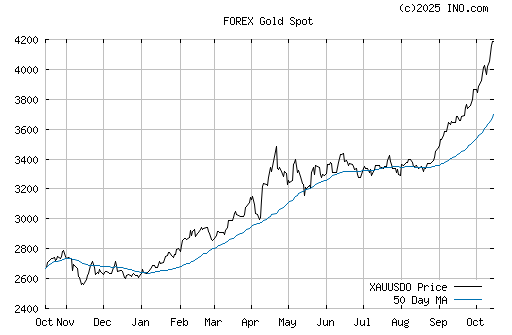
Gold hit a record $1815 just a few hours ago while silver is chilling at the $39 range. I thought that we would have a meaningful correction but that has not come to pass. Despite the equity markets taking a hit silver has stood firm. I'm loading up this week on a bunch of eagles.
Witness the incredible gold bull market:

Now check out the historical dow/gold chart:

This footage out of London is absolutely incredible. Amazing how a world class city like London can go mad max so quickly. If the authorities don't get a handle on this situation soon then the tanks will have to be forced out of Helmand province in a scramble to secure their capitol city. How embarassing for the establishment.
Watch the police get overrun.
Unreal. I'm curious to see if similar shit will happen here soon. Just imagine if the US Dollar suffered a terrible loss of value in a short period of time. Imagine if prices here double or tripled in the span of a few weeks. That would equate to a large group of terribly pissed off people.
Stay tuned, the freak show continues.
http://www.kurzonstrauss.com/uploads/NYLS_Filed_w_Index_Number_Summons_and_Complaint.pdf
This firm is seeking to sue a bunch of schools across the country so give them a call if you want to pick a fight with your alma mater. I would like to personally thank attorney David Anziska for all his hard work and dedication into bringing these suits into fruition. Good luck as the schools will give you hell in opposing these law suits so give them hell X 500 in return.
Even EDMC is getting sued for fraud LOL LOL byebye University of Phoenix playtime is over.
Gold hit a record $1815 just a few hours ago while silver is chilling at the $39 range. I thought that we would have a meaningful correction but that has not come to pass. Despite the equity markets taking a hit silver has stood firm. I'm loading up this week on a bunch of eagles.
Witness the incredible gold bull market:
Now check out the historical dow/gold chart:

This footage out of London is absolutely incredible. Amazing how a world class city like London can go mad max so quickly. If the authorities don't get a handle on this situation soon then the tanks will have to be forced out of Helmand province in a scramble to secure their capitol city. How embarassing for the establishment.
Watch the police get overrun.
Unreal. I'm curious to see if similar shit will happen here soon. Just imagine if the US Dollar suffered a terrible loss of value in a short period of time. Imagine if prices here double or tripled in the span of a few weeks. That would equate to a large group of terribly pissed off people.
Stay tuned, the freak show continues.
European Banking Crisis; Gold $1,800
Europe's banks are bleeding losses today as sovereign debt fears have gripped the continent. A simple glance at some European bank stocks shows the extent of the panic:
Societe General: down 21%
BNP Paribas: down 10%
Intesa: down 10% halted
Unicredit: down 10% halted
From Bloomberg:
Societe Generale (GLE) SA posted a record decline and led a drop in French banking shares as the cost of insuring the country’s government bonds increased. UniCredit SpA (UCG), Italy’s biggest bank, paced a retreat in Italian banks after the country’s credit-default swaps widened.
Societe Generale shares slumped as much as 23 percent and were down 16 percent at 21.89 euros at 4:27 p.m. in Paris. Credit-default swaps on the bank rose 29 basis points to a record 299 basis points.
Societe Generale “categorically denies all market rumors,” Emmanuelle Renaudat, a spokeswoman for the French bank said in an interview. She declined to be more specific.
Bank shares lost 5.3 percent, for the biggest decline among the 19 industry groups in the Stoxx Europe 600 Index and the steepest drop since May 2009. French and Italian banks led the retreat. BNP Paribas (BNP) SA shed 11 percent to 35.06 euros and Credit Agricole SA (ACA) sank 15 percent to 5.82 euros.
“If credit default swaps on France are under attack, that’s not a good sign,” said Yves Marcais, a sales trader at Global Equities in Paris. “That means that France is under attack and that’s worrisome. French banks hold a lot of French bonds.”
The cost to insure French government debt against default rose 10 basis points to a record 171 basis points, according to CMA.
http://www.bloomberg.com/news/2011-08-10/socgen-leads-fall-in-french-banks-as-credit-default-swaps-gain.html
Once again the market plunges after yesterdays rally. Gold hit $1800 and is on its way to $2,000.00 and eventually $5,000.00 unless the powers that be stop printing digital fiat currency. Jeremy Grantham said that S&P fair value is 950 which sounds reasonable under the circumstances.
Bottom line: expect the economy to shrink again with more layoffs and higher unemployment. One positive is that food and gas prices will come down as crude is now trading at $80.00 woohoo.
Societe General: down 21%
BNP Paribas: down 10%
Intesa: down 10% halted
Unicredit: down 10% halted
From Bloomberg:
Societe Generale (GLE) SA posted a record decline and led a drop in French banking shares as the cost of insuring the country’s government bonds increased. UniCredit SpA (UCG), Italy’s biggest bank, paced a retreat in Italian banks after the country’s credit-default swaps widened.
Societe Generale shares slumped as much as 23 percent and were down 16 percent at 21.89 euros at 4:27 p.m. in Paris. Credit-default swaps on the bank rose 29 basis points to a record 299 basis points.
Societe Generale “categorically denies all market rumors,” Emmanuelle Renaudat, a spokeswoman for the French bank said in an interview. She declined to be more specific.
Bank shares lost 5.3 percent, for the biggest decline among the 19 industry groups in the Stoxx Europe 600 Index and the steepest drop since May 2009. French and Italian banks led the retreat. BNP Paribas (BNP) SA shed 11 percent to 35.06 euros and Credit Agricole SA (ACA) sank 15 percent to 5.82 euros.
“If credit default swaps on France are under attack, that’s not a good sign,” said Yves Marcais, a sales trader at Global Equities in Paris. “That means that France is under attack and that’s worrisome. French banks hold a lot of French bonds.”
The cost to insure French government debt against default rose 10 basis points to a record 171 basis points, according to CMA.
http://www.bloomberg.com/news/2011-08-10/socgen-leads-fall-in-french-banks-as-credit-default-swaps-gain.html
Once again the market plunges after yesterdays rally. Gold hit $1800 and is on its way to $2,000.00 and eventually $5,000.00 unless the powers that be stop printing digital fiat currency. Jeremy Grantham said that S&P fair value is 950 which sounds reasonable under the circumstances.
Bottom line: expect the economy to shrink again with more layoffs and higher unemployment. One positive is that food and gas prices will come down as crude is now trading at $80.00 woohoo.
Sunday, July 17, 2011
Market update
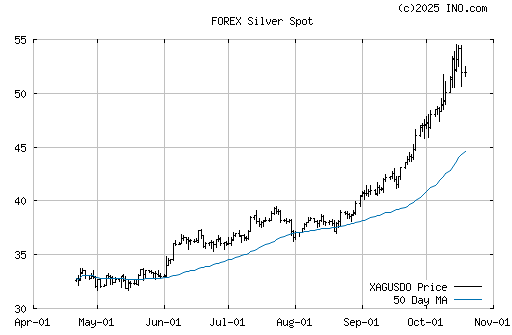
The stealth gold bull market continues as gold saw yet a new record high of $1594 this week. Silver is near closing the gap as it bumps up against $40.00. I expected it to fall alongside equities during the summer but that has yet to transpire. The news out of Europe continues to put a dark cloud over the markets as Italian yields blew out this week alongside Spain. In response, the Eurocrats are already discussing the option of ballooning the size of the European Financial Stability Fund to a whopping $2.5 trillion Euros or $3.5 trillion dollars. You see, Italy has the potential of causing serious problems to the banking system as it has over $2.2 trillion in outstanding government bonds compared to Greece’s 400 billion dollar debt. With debt equating to 120% of GDP, Italy is dangling close to the debt death spiral. Now that interest rates jumped higher, their funding situation just became a whole lot more precarious.
Gold 1 year chart:
Silver 6 month chart:

Naturally the policy makers will come to the rescue as Italy is without a doubt “too big to fail” and so the ponzi will continue. Just as the republicans put up a little fight over the debt ceiling but ended up capitulating, so will the Germans who publicly oppose the subsidization of their southern buddies. There will come a point where the European Monetary Union will unravel as it is completely unsustainable for 17 separate countries to operate under a common currency with similar central interest rates but no central fiscal funding mechanism. However, the Eurocrats have fought hard for their beloved Union and will not go down without a fight. This monstrosity may last longer than most believe as powerful vested interests have billions at stake in keeping the EU together. Perhaps Greece and Ireland will get the boot at some point soon.
Italy 10 year government bonds:

In response to all this news gold jumps higher and will continue to rise as currency debasement has become in vogue across the developed world. Gold also jumped when that pesky little critter Bernanke uttered words that “in the event that conditions are such that accommodation may be required, the federal reserve is willing to provide additional monetary support and accommodation.” In other words, QE 3. Upon the official pronouncement of the third round of monetary easing the precious metals will be set to rally hard. And they will rally again on the 4th, 5th and 6th rounds of easing until we enter a new paradigm regarding international transactions and what the pricing mechanism will be. Already we are seeing gold rise to its historical position of reserve currency.
Left out of this discussion is the effect that future easing will have on the oil market. Although it’s possible that the Middle East conflicts could calm down it is equally possible that a larger conflict erupts involving bigger players such as Saudi Arabia and Iran. For example, the Kingdom of SA has increased military spending to over 11% of GDP and has been getting armed to the teeth with the KSA ranking in the top 10 countries in the world for military spending. Not that I see any armed conflict between these two regional powers breaking out anytime soon the potential is there. And there is always the potential for a Iran-Israel air war which could break out if Israel engages in a pre-emptive strike on Iranian nuclear sites. Per ex-CIA Robert Baer, "There is almost "near certainty" that Netanyahu is "planning an attack [on Iran] ... and it will probably be in September before the vote on a Palestinian state. And he's also hoping to draw the United States into the conflict."
http://www.zerohedge.com/article/cvn-77-ghw-bush-enters-persian-gulf-cia-veteran-robert-baer-predicts-september-israel-iran-w
In the event of a Iran-Israel war, even if short lived, could easily send the oil market in a tizzy as we could potentially see $150 crude sinking the world economy back into recession. This is a tail-risk that needs to be closely watched. I have had a Iran-Israel conflict on my list of potential tail-risks and this recent report definitely raises the scales.
But back to the oil market more monetary easing will simply translate into higher energy prices which will then push the prices of everything else higher. Lastly, there are serious supply issues that will need to be addressed in the next decade as supply constrains will act as a further tailwind for energy prices.
To this day the majority of the wealthy people that I know own virtually no gold or silver holdings. Faith in paper currency is practically as strong as it was a decade ago but there are cracks appearing in the fiat edifice. Many are hesitant to buy at these lofty levels but the point is not to see the value of gold against the dollar but the value of the dollar and all paper currency against gold. I reiterate my call for $5,000 gold and $100 silver.
Lastly, the law school bubble continues to blow upward with law school applicants acting as momos (momentum chasers). These fools are buying into a extremely overpriced product that has deteriorating fundamentals (jobs and wages) just because of legacy value and confirmation bias. I still hold the view that the bubble will bust when the funding source (the department of Education) cuts the money spigot as younger aged Americans are simply too naive to see the risks inherent this market. Although quality applicants will fall in number to lower tiered schools, there are plenty of people out there that are willing to "give it a shot" and take the plunge. At least when I applied in 2005 there wasn't much information about the TTT world. Enter 2011 and the net is inundated with articles and blogs bemoaning the dismal state of the legal market for TTT grads. Just typing in tier 4 law school in google will show hundreds of articles and message boards warning people not to attend. At this point the information is there.
Gold 1 year chart:
Silver 6 month chart:
Naturally the policy makers will come to the rescue as Italy is without a doubt “too big to fail” and so the ponzi will continue. Just as the republicans put up a little fight over the debt ceiling but ended up capitulating, so will the Germans who publicly oppose the subsidization of their southern buddies. There will come a point where the European Monetary Union will unravel as it is completely unsustainable for 17 separate countries to operate under a common currency with similar central interest rates but no central fiscal funding mechanism. However, the Eurocrats have fought hard for their beloved Union and will not go down without a fight. This monstrosity may last longer than most believe as powerful vested interests have billions at stake in keeping the EU together. Perhaps Greece and Ireland will get the boot at some point soon.
Italy 10 year government bonds:
In response to all this news gold jumps higher and will continue to rise as currency debasement has become in vogue across the developed world. Gold also jumped when that pesky little critter Bernanke uttered words that “in the event that conditions are such that accommodation may be required, the federal reserve is willing to provide additional monetary support and accommodation.” In other words, QE 3. Upon the official pronouncement of the third round of monetary easing the precious metals will be set to rally hard. And they will rally again on the 4th, 5th and 6th rounds of easing until we enter a new paradigm regarding international transactions and what the pricing mechanism will be. Already we are seeing gold rise to its historical position of reserve currency.
Left out of this discussion is the effect that future easing will have on the oil market. Although it’s possible that the Middle East conflicts could calm down it is equally possible that a larger conflict erupts involving bigger players such as Saudi Arabia and Iran. For example, the Kingdom of SA has increased military spending to over 11% of GDP and has been getting armed to the teeth with the KSA ranking in the top 10 countries in the world for military spending. Not that I see any armed conflict between these two regional powers breaking out anytime soon the potential is there. And there is always the potential for a Iran-Israel air war which could break out if Israel engages in a pre-emptive strike on Iranian nuclear sites. Per ex-CIA Robert Baer, "There is almost "near certainty" that Netanyahu is "planning an attack [on Iran] ... and it will probably be in September before the vote on a Palestinian state. And he's also hoping to draw the United States into the conflict."
http://www.zerohedge.com/article/cvn-77-ghw-bush-enters-persian-gulf-cia-veteran-robert-baer-predicts-september-israel-iran-w
In the event of a Iran-Israel war, even if short lived, could easily send the oil market in a tizzy as we could potentially see $150 crude sinking the world economy back into recession. This is a tail-risk that needs to be closely watched. I have had a Iran-Israel conflict on my list of potential tail-risks and this recent report definitely raises the scales.
But back to the oil market more monetary easing will simply translate into higher energy prices which will then push the prices of everything else higher. Lastly, there are serious supply issues that will need to be addressed in the next decade as supply constrains will act as a further tailwind for energy prices.
To this day the majority of the wealthy people that I know own virtually no gold or silver holdings. Faith in paper currency is practically as strong as it was a decade ago but there are cracks appearing in the fiat edifice. Many are hesitant to buy at these lofty levels but the point is not to see the value of gold against the dollar but the value of the dollar and all paper currency against gold. I reiterate my call for $5,000 gold and $100 silver.
Lastly, the law school bubble continues to blow upward with law school applicants acting as momos (momentum chasers). These fools are buying into a extremely overpriced product that has deteriorating fundamentals (jobs and wages) just because of legacy value and confirmation bias. I still hold the view that the bubble will bust when the funding source (the department of Education) cuts the money spigot as younger aged Americans are simply too naive to see the risks inherent this market. Although quality applicants will fall in number to lower tiered schools, there are plenty of people out there that are willing to "give it a shot" and take the plunge. At least when I applied in 2005 there wasn't much information about the TTT world. Enter 2011 and the net is inundated with articles and blogs bemoaning the dismal state of the legal market for TTT grads. Just typing in tier 4 law school in google will show hundreds of articles and message boards warning people not to attend. At this point the information is there.
Sunday, April 10, 2011
Marc Faber on CNBC
Marc Faber is one of my favorite investment analysts out there. Here is a quick bio:
Dr Marc Faber was born in Zurich, Switzerland. He went to school in Geneva and Zurich and finished high school with the Matura. He studied Economics at the University of Zurich and, at the age of 24, obtained a PhD in Economics magna cum laude.
Since 1973, he has lived in Hong Kong. From 1978 to February 1990, he was the Managing Director of Drexel Burnham Lambert (HK) Ltd. In June 1990, he set up his own business, MARC FABER LIMITED which acts as an investment advisor and fund manager.
Dr Faber publishes a widely read monthly investment newsletter "The Gloom Boom & Doom Report" report which highlights unusual investment opportunities, and is the author of several books including “ TOMORROW'S GOLD – Asia's Age of Discovery” which was first published in 2002 and highlights future investment opportunities around the world. “ TOMORROW'S GOLD ” was for several weeks on Amazon's best seller list and is being translated into Japanese, Chinese, Korean, Thai and German. Dr. Faber is also a regular contributor to several leading financial publications around the world.
Faber is famous for correctly forecasting market rises and crashes. He is famous for telling his clients to get out of US stocks one week before the 1987 crash. He has made numerous other calls that have come to pass. Faber is extremely negative on US government debt and the US dollar. He also calls Bernanke "a money printer" on a regular basis.
Here is the latest interview he gave on CNBC on April 8, 2011.
What I love about Faber is that he not only talks about investments but also discusses economics in a simple manner that almost anyone can understand. In this interview he says that there is "inflation everywhere except at the federal reserve" lol.
Dr Marc Faber was born in Zurich, Switzerland. He went to school in Geneva and Zurich and finished high school with the Matura. He studied Economics at the University of Zurich and, at the age of 24, obtained a PhD in Economics magna cum laude.
Since 1973, he has lived in Hong Kong. From 1978 to February 1990, he was the Managing Director of Drexel Burnham Lambert (HK) Ltd. In June 1990, he set up his own business, MARC FABER LIMITED which acts as an investment advisor and fund manager.
Dr Faber publishes a widely read monthly investment newsletter "The Gloom Boom & Doom Report" report which highlights unusual investment opportunities, and is the author of several books including “ TOMORROW'S GOLD – Asia's Age of Discovery” which was first published in 2002 and highlights future investment opportunities around the world. “ TOMORROW'S GOLD ” was for several weeks on Amazon's best seller list and is being translated into Japanese, Chinese, Korean, Thai and German. Dr. Faber is also a regular contributor to several leading financial publications around the world.
Faber is famous for correctly forecasting market rises and crashes. He is famous for telling his clients to get out of US stocks one week before the 1987 crash. He has made numerous other calls that have come to pass. Faber is extremely negative on US government debt and the US dollar. He also calls Bernanke "a money printer" on a regular basis.
Here is the latest interview he gave on CNBC on April 8, 2011.
What I love about Faber is that he not only talks about investments but also discusses economics in a simple manner that almost anyone can understand. In this interview he says that there is "inflation everywhere except at the federal reserve" lol.
Subscribe to:
Posts (Atom)

